Quick Summary: What Can You Eat After Appendix Surgery?
Direct Answer: During the initial 24 hours following an appendectomy, stick exclusively to clear liquids (lukewarm water, coconut water, clear broth, and ORS). From days 2 to 3, advance to soothing semi-solid foods such as moong dal khichdi, dalia, mashed bananas, and probiotic curd. By days 4 to 7, reintroduce lean proteins (boiled chicken, egg whites, soft paneer) and well-steamed vegetables. Strictly avoid deep-fried foods, heavy spices, carbonated drinks, gas-producing cruciferous vegetables, and raw salads to prevent painful bloating and surgical site strain.
Undergoing emergency or elective appendix surgery marks the end of painful appendicitis, but full recovery relies heavily on your digestive choices in the following weeks. Because the appendix is connected directly to the cecum at the junction of your small and large intestines, your bowel temporarily halts its normal rhythmic contractions (peristalsis) following surgical manipulation.
Patients consulting leading surgical experts for Appendix Surgery in Delhi routinely seek guidance from Dr. Aloy Mukherjee on what can i eat after appendix surgery to prevent post-op complications. Managing your diet after appendectomy with clinical precision ensures rapid tissue healing, prevents medication-induced constipation, and eliminates trapped abdominal gas.
Whether you underwent a minimally invasive procedure with rapid laparoscopic appendectomy recovery or an open operation, this guide provides a structured breakdown of what to eat after appendix surgery, safe recovery fruits, and what foods to strictly avoid.
Why Proper Nutrition Matters After Appendectomy
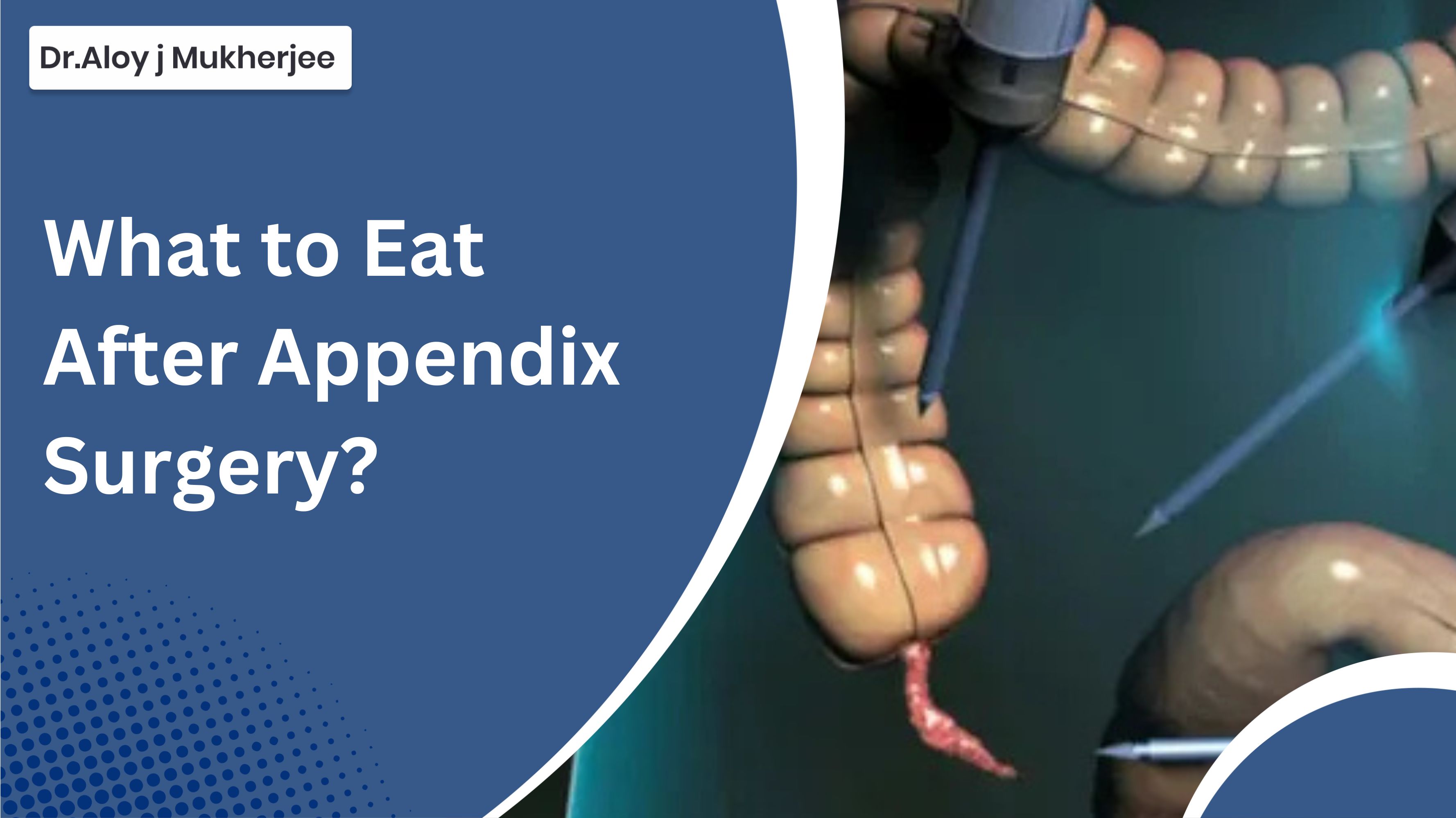
An appendectomy involves transecting and ligating the inflamed appendix right at the base of the cecum. During the immediate post-operative window, the digestive system experiences unique physiological stressors:
- Post-Anesthetic Ileus: General anesthesia temporarily paralyzes gut motility. Introducing dense solid food too early triggers severe abdominal distension, nausea, and bilious vomiting.
- Local Tissue Inflammation: The surgical stump and surrounding peritoneum require calm, non-irritating digestion while suture lines or surgical clips seal securely.
- Painkiller-Induced Constipation: Opioid and anti-inflammatory analgesics slow colonic transit. Straining to pass hard stool significantly raises intra-abdominal pressure, causing sharp incisional pain.
- Antibiotic Impact on Gut Flora: Pre- and post-operative intravenous antibiotics deplete protective gut bacteria, making probiotic-rich food vital for rebuilding healthy digestion.
For additional details regarding surgical technique differences, review our clinical breakdown on the appendix surgery procedure.
Phase-by-Phase Roadmap: What to Eat After Appendix Surgery
A systematic progression across dietary stages gives your intestines adequate time to recover motility without discomfort:
Stage 1: Hours 0 to 24 Post-Op (Clear Liquids & Rehydration)
The goal is to gently rehydrate and awaken bowel sounds without straining your stomach lining. Sip slowly (30 to 50 ml at a time):
- Lukewarm water & electrolyte solutions (ORS): Prevents dizziness and restores cellular sodium-potassium balance.
- Clear strained vegetable or chicken broth: Supplies essential amino acids and electrolytes in an easily absorbable form.
- Fresh coconut water: Naturally rich in electrolytes and gentle on sensitive gastric mucosa.
- Strained rice water (kanji): Provides soothing carbohydrates to stabilize energy.
- Mild herbal teas: Lukewarm chamomile, ginger, or mint infusions to alleviate post-op nausea and abdominal spasms.
Stage 2: Days 2 to 3 Post-Op (Full Liquids & Pureed Soft Foods)
Once you are comfortably passing gas and tolerating clear fluids without nausea, transition to low-fat, semi-solid nutrition:
- Moong dal khichdi: Soft, well-cooked yellow moong dal and rice prepared with minimal seasoning.
- Oatmeal and wheat dalia (porridge): Cooked soft with water or skimmed milk for soluble fiber that prevents stool hardening.
- Pureed vegetable soups: Smooth bottle gourd (lauki), pumpkin, and carrot soups without cream or black pepper.
- Fresh homemade curd (dahi) or plain chaach: Natural probiotics to restore beneficial microflora depleted by surgical antibiotics.
- Mashed potatoes and soft idlis: Mild, non-acidic carbohydrates for clean cellular energy.
Stage 3: Days 4 to 7 Post-Op (Soft Solids & Lean Proteins)
As normal bowel movements resume, emphasize tissue-repairing macronutrients similar to a balanced laparoscopic post-op diet:
- Boiled egg whites: Pure, high-biological-value protein for collagen regeneration at incision sites.
- Shredded boiled chicken breast or steamed fish: Tender, lean animal proteins that do not burden digestive enzymes.
- Soft, fresh paneer or tofu: Lightly tossed or boiled in mild broth without pungent chilies.
- Well-cooked gourds and spinach: Steamed zucchini, tori, lauki, and tender carrots.
- Soft chapatis: Made from finely milled whole-wheat flour, well-soaked in dal for easy swallowing and digestion.
Stage 4: Week 2 and Beyond (Gradual Normal Diet)
You can progressively resume standard household meals. Maintain sensible portion sizes, chew slowly, and keep hydration high.
Comprehensive List of Foods to Eat After Appendix Surgery
When planning your daily recovery meals, ensure your plate features items from this clinical list of foods to eat after appendix surgery:
- Easily Absorbable Lean Proteins: Egg whites, boiled skinless chicken, steamed freshwater fish, soft yellow moong dal, paneer, and tofu to accelerate wound closure.
- Gentle Soluble Fiber: Rolled oats, wheat porridge (dalia), stewed apples, and psyllium husk (isabgol) to keep stools soft without provoking gas.
- Hydrating Fluids: At least 8 to 10 glasses of fluids daily (tender coconut water, clear broths, warm water, and buttermilk) to counteract dehydration and facilitate bowel clearance.
- Digestive Complex Carbohydrates: Well-steamed white rice, suji upma, plain crackers, and soft wheat rotis for continuous energy.
- Gut-Healing Probiotics: Fresh unsweetened curd, buttermilk with a pinch of roasted cumin, and kefir to rebuild bowel resistance against pathogens.
Recommended List of Fruits to Eat After Appendix Surgery
Fruits are an exceptional source of vitamins, antioxidants, and water. However, unpeeled or highly acidic fruits can trigger gastric irritation and gas cramps. Refer to this targeted list of fruits to eat after appendix surgery:
Safest Fruits for Appendix Recovery
- Ripe Papaya: Contains the natural proteolytic enzyme papain, which aids protein breakdown, reduces inflammation, and acts as a gentle stool softener.
- Ripe Bananas: Extremely easy on the stomach lining, rich in potassium, and provides easily digestible carbohydrates.
- Stewed or Peeled Apples: Cooking apples softens insoluble roughage and releases soluble pectin, which regulates bowel consistency.
- Chikoo (Sapodilla): Soft, rich in mild dietary fiber and vitamin C, supporting steady energy.
- Peeled Sweet Melons (Muskmelon / Cantaloupe): High moisture content that keeps your intestines well-hydrated without excess acidity.
- Peeled Pears: Soft, ripe pears provide gentle hydration and vitamin C for tissue repair.
Note: Avoid citrus fruits (oranges, lemons, grapefruits) on an empty stomach during the first 5 days, as citrus acid may induce heartburn and nausea. Avoid unpeeled guavas or fruits with hard seeds.
Reference Comparison: Best Food vs. Foods to Avoid
Use this convenient chart to verify food to eat after appendix surgery versus ingredients that must be avoided:
| Nutrient Category | Best Food After Appendix Surgery (Safe) | Foods to Avoid (Complications & Gas Risk) |
|---|---|---|
| Beverages & Liquids | Warm water, coconut water, clear bone broth, vegetable soup, ORS, chamomile tea. | Carbonated sodas, cola, alcohol, packaged sweetened juices, iced tea, excess strong coffee. |
| Proteins | Boiled egg whites, steamed fish, shredded chicken breast, yellow moong dal, soft paneer. | Red meat (mutton, beef), fried chicken, spicy sausages, whole boiled eggs in excess, heavy chana dal. |
| Grains & Breads | Moong dal khichdi, dalia, suji, soft white rice, soft rotis soaked in dal, plain toast. | Puri, bhature, naan, pizza crust, packaged instant noodles, heavy stuffed parathas, croissants. |
| Vegetables | Bottle gourd (lauki), ridge gourd (tori), pumpkin, boiled carrots, tender spinach, peeled potatoes. | Cabbage, cauliflower, broccoli, radish, raw onions, garlic-heavy pastes, unpeeled eggplant. |
| Dairy | Low-fat homemade curd, plain buttermilk, splash of skimmed milk. | Full-cream milk, processed cheese slices, heavy cream, butter, creamy pasta sauces. |
What Foods to Strictly Avoid After Appendix Surgery
Steering clear of improper foods protects the delicate ileocecal junction from strain and keeps post-op pain manageable:
Foods That Hinder Appendectomy Recovery
- Deep-Fried and Greasy Foods: Samosas, pakoras, French fries, and oily curries delay gastric emptying, causing nausea, bilious reflux, and severe cramping.
- Pungent Masalas & Red Chillies: Spices inflame healing gastrointestinal mucosa, causing intense burning sensations and loose motions.
- Gas-Producing Cruciferous Vegetables: Cabbage, cauliflower, radishes, and whole kidney beans (rajma) ferment in the colon, creating trapped gas that presses painfully against surgical wounds.
- Raw Roughage & Coarse Salads: Tough cellulose in raw cucumbers, carrots, and unpeeled fruits requires intense mechanical churning that exhausted intestines cannot handle in week one.
- Carbonated Beverages & Sodas: Fizzy sodas pump carbon dioxide directly into your digestive tract, severely exacerbating abdominal bloating.
- Alcohol and Cigarettes: Alcohol interacts unpredictably with prescription painkillers and impairs tissue healing. Nicotine restricts blood microcirculation necessary for wound closure. Refrain from both for at least 3 weeks.
Uncomplicated Appendectomy vs. Ruptured Appendix Recovery
The speed at which you can advance your diet depends significantly on the state of your appendix at the time of surgery:
- Uncomplicated (Dry) Appendix Surgery: When inflammation is confined to the appendix without rupture, patients typically resume clear liquids within 12 hours, soft foods by day 2, and light household meals by day 7.
- Perforated or Ruptured Appendix: If the appendix ruptured and caused localized or generalized peritonitis, abdominal washing and drainage were required. In such cases, the bowel remains sluggish for a longer period. Patients may remain on intravenous fluids and clear liquids for 2 to 4 days, advancing to soft purees slowly over 10 to 14 days under strict surgical observation.
4 Golden Rules for Eating After Appendectomy
- Eat 5 to 6 Mini Meals: Divide your daily nutrition into smaller, frequent portions so your stomach is never overstretched.
- Chew Every Morsel to Puree Consistency: Thorough mastication allows salivary enzymes to begin digestion before food reaches your stomach.
- Drink Fluids Between, Not During Meals: Sip water 30 minutes before or after meals to avoid diluting gastric juices.
- Engage in Light Post-Meal Walking: A gentle 10-minute stroll around your room 20 minutes after eating stimulates natural peristalsis and expels trapped gas.
Frequently Asked Questions (AEO FAQs)
Q1. What to eat after appendectomy on the very first day?
On day one, stick exclusively to clear liquids like lukewarm water, tender coconut water, strained vegetable broth, and oral rehydration solutions. Do not rush into solid food until your surgeon confirms the return of active bowel sounds and you have passed flatus.
Q2. Which fruits should I include in my recovery diet?
The best choices from our list of fruits to eat after appendix surgery are ripe papaya, ripe bananas, stewed peeled apples, soft chikoo, and peeled sweet melons. They offer high water content, soothing pectin, and mild natural sugars without causing acidity.
Q3. How long should I follow a soft diet after appendix removal?
Most patients follow a soft diet for 5 to 7 days following laparoscopic appendix removal. If you had open surgery or a ruptured appendix, you may need to extend soft eating for 10 to 14 days until your digestion completely stabilizes.
Q4. Can I drink milk after appendix surgery?
Full-fat cow's milk can induce bloating, gas, and constipation during the initial post-op week. If you desire dairy, opt for low-fat buttermilk (chaach) or fresh homemade curd (dahi), which supply gut-friendly probiotics without digestive distress.
Q5. When can I return to normal family meals?
Most patients safely transition back to normal household meals by week 2 or 3, provided meals are moderately spiced, non-greasy, and accompanied by plenty of water.
Q6. When should I immediately contact my surgeon?
Contact your surgical team immediately if you develop a fever above 100.4°F, persistent vomiting, escalating abdominal distension, severe pain unrelieved by prescribed medication, or failure to pass gas or stool for over 48 hours.
Summary: Fueling a Safe and Speedy Recovery
Your surgical procedure successfully removed the source of acute infection, but your dietary discipline determines how smoothly your bowel heals. By following a structured phase-wise diet after appendectomy, staying thoroughly hydrated, emphasizing easily assimilated lean proteins, and avoiding fried, spicy, and gas-producing irritants, you ensure complete recovery without painful setbacks.
For expert guidance or clinical consultations regarding appendix conditions and minimally invasive procedures, schedule an appointment with Dr. Aloy Mukherjee, premier specialist for Appendix Surgery in Delhi. Visit our contact page to arrange your consultation.